Razer Phone Review - Gaming in your Pocket
By daire-May 5, 2018
Sleek Minimal Design
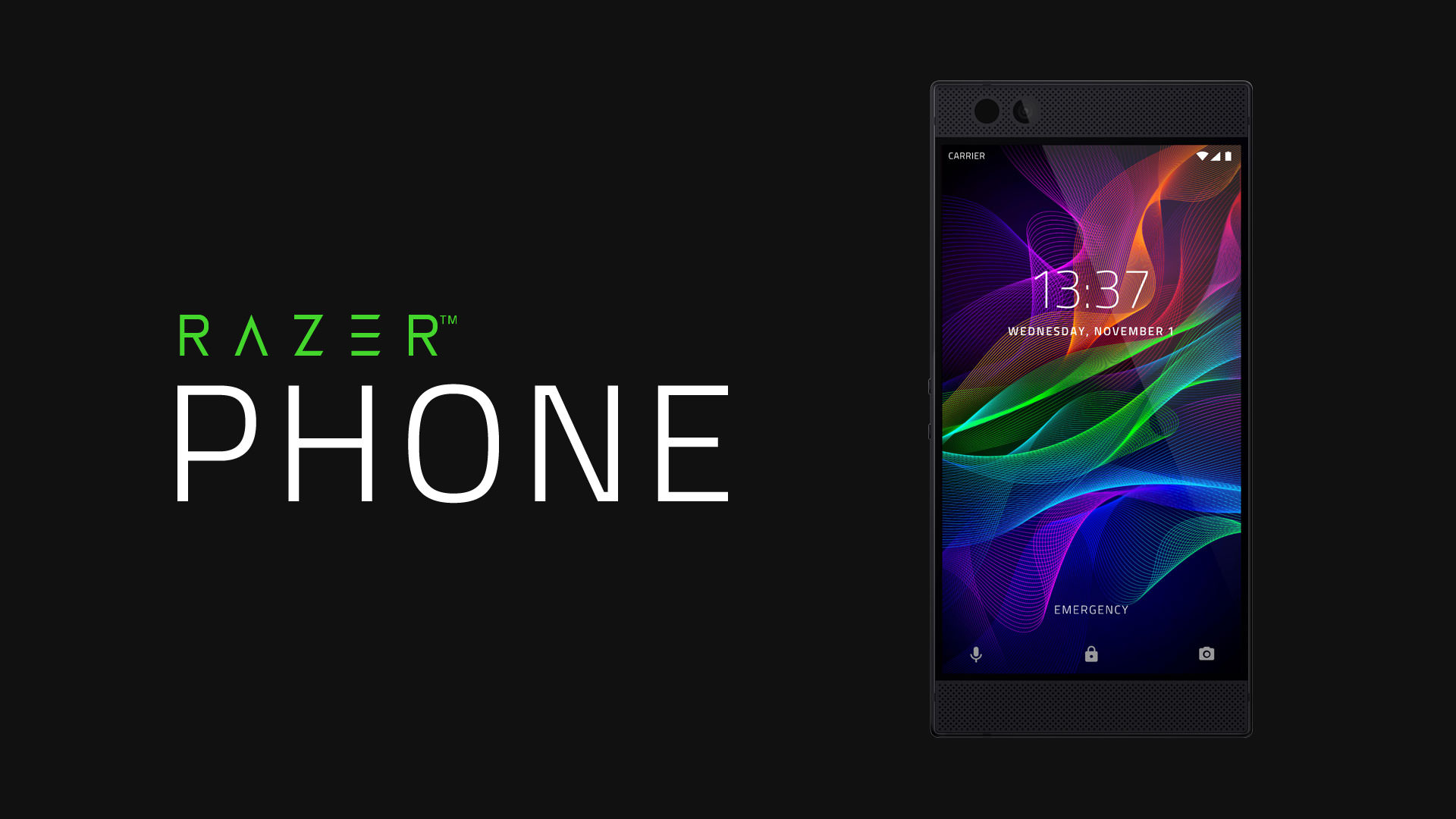
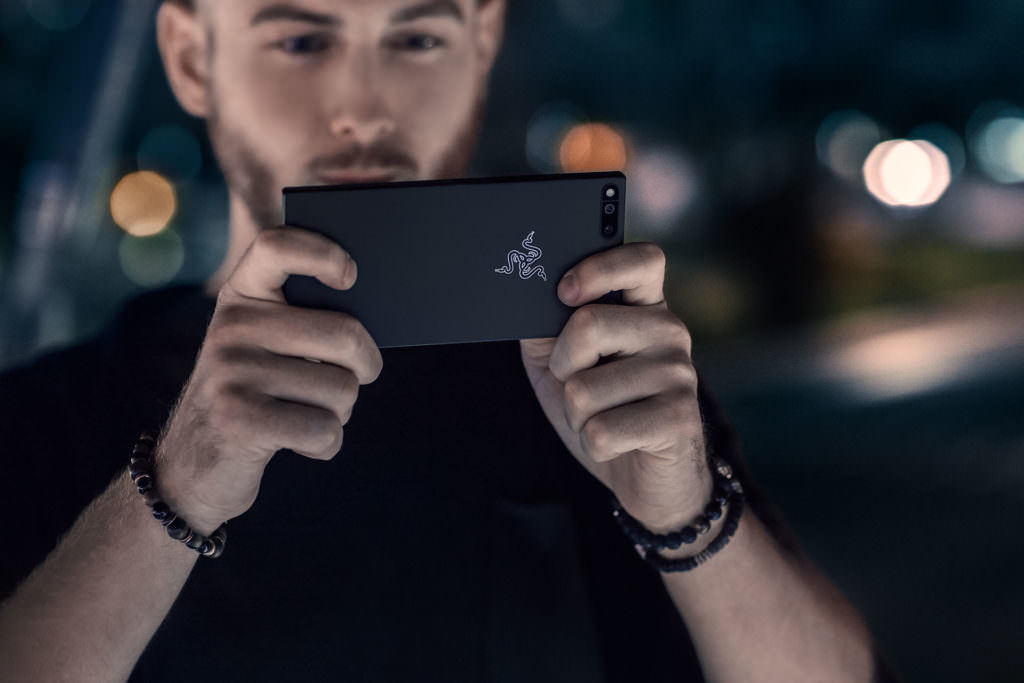
As I mentioned already, the Razer Phone is the spiritual and physical successor to the cloud smartphone Nextbit Robin. This phone was first introduced to Kickstarter in 2015 and incorporated a simple, flat but sharp design with no curves. The Japanese manufacturer Sony held on to this design until the beginning of 2018 until they changed the look when the introduced the Xperia XZ2 and Xperia XZ2 Compact. Razer keeps the original design for the Razer Phone. While this is a unique selling point and will stand out against other current flagship phones it does look a bit dated. The overall design, however, is built more around practicality than the actual look. The build quality of the Razer Phones is extremely high. Elements such as the dual camera on the rear are neatly placed and show no unsightly gaps. The metal unibody looks a bit dated compared to gorilla glass housings seen in many modern phones, but at the same time, it's also robust. The phone measures 158.6 x 78.9 x 8.8mm and weighs little under 200g. On the rear of the phone, the Razer logo is embossed in the metal housing. At first glance, it looks like a miniature version of the included stickers and there is a slight lip around the edges of the logo. I found this a little disappointing as it seems like a feature that would have received a huge amount of care and deliberation. The phone also comes without any IP certification and is, therefore, neither waterproof nor dust-proof.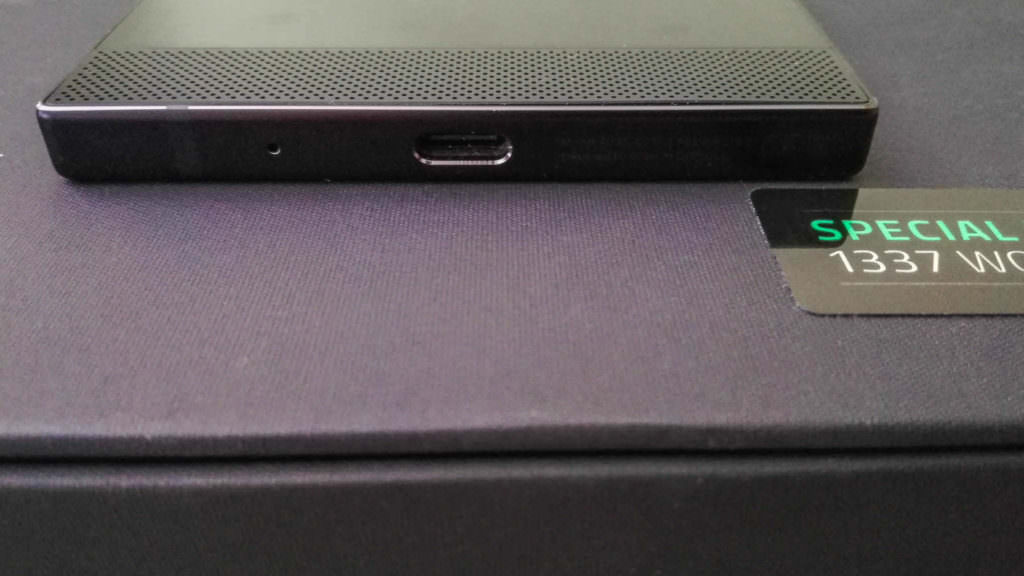 The phone uses a USB Type-C port for charging. This seems to be the new standard for phones as they charge quicker and have a faster data-transfer rate. What the phone lacks, however, is a 3.5mm audio port for headphones. Included in the bundle is a Razer-branded USB Type-C - 3.5mm converter but this only works if your phone is not charging. What happens if you tend to play games for long periods of times and want to charge the phone and use headphones at the same time?
The obvious solution would be to use Bluetooth headphones, but again, these aren't for everyone and can be on the expensive side. What really disappointed me, in the end, is that, while the phone included a USB Type-C converter, it didn't come with any headphones included. Considering the price of the phone Razer could have easily included a pair of low-cost headphones. I would have thought that including a pair of Razer Hammerhead USB-C in-ear headphones would have been a pretty good branding opportunity here.
The phone uses a USB Type-C port for charging. This seems to be the new standard for phones as they charge quicker and have a faster data-transfer rate. What the phone lacks, however, is a 3.5mm audio port for headphones. Included in the bundle is a Razer-branded USB Type-C - 3.5mm converter but this only works if your phone is not charging. What happens if you tend to play games for long periods of times and want to charge the phone and use headphones at the same time?
The obvious solution would be to use Bluetooth headphones, but again, these aren't for everyone and can be on the expensive side. What really disappointed me, in the end, is that, while the phone included a USB Type-C converter, it didn't come with any headphones included. Considering the price of the phone Razer could have easily included a pair of low-cost headphones. I would have thought that including a pair of Razer Hammerhead USB-C in-ear headphones would have been a pretty good branding opportunity here.
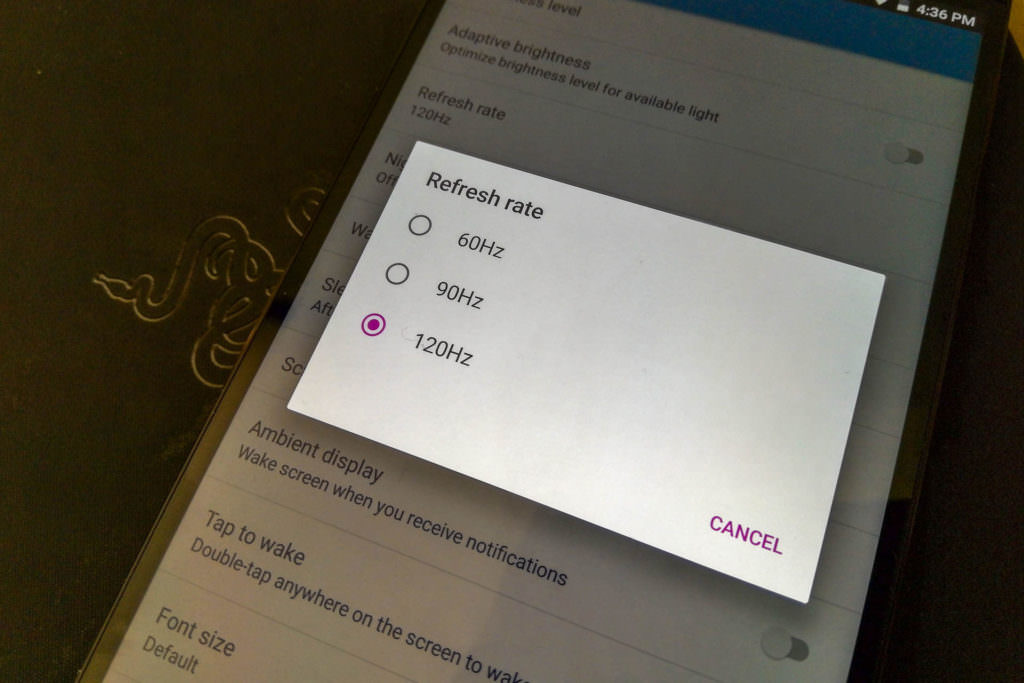
Not Your Grandmas Display
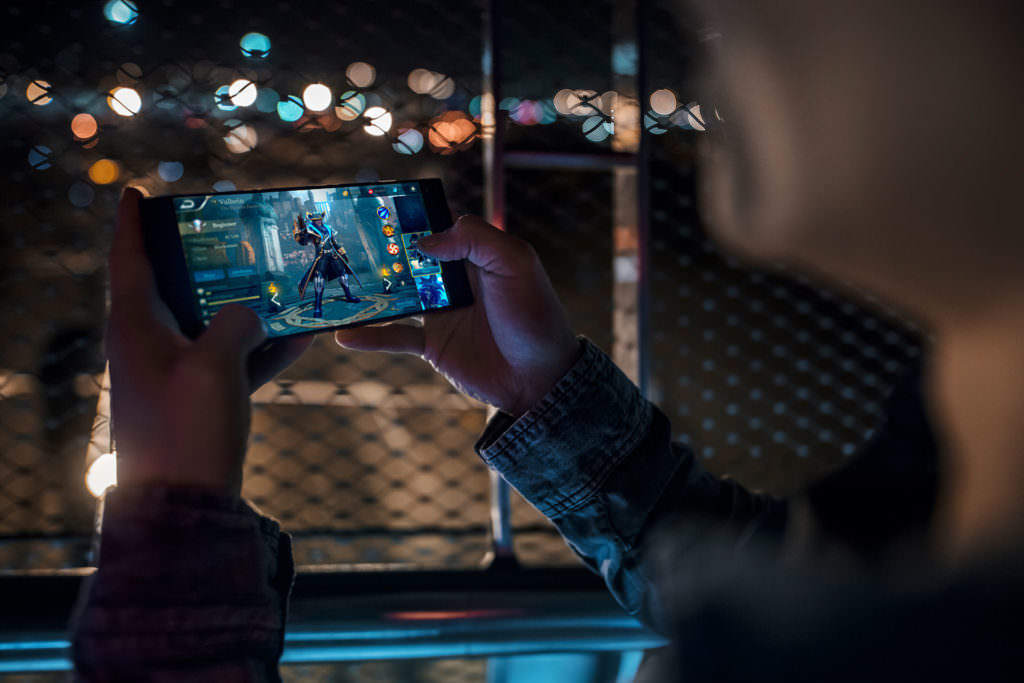
The screen of the Razer phone at first glance may seem like any ordinary smartphone display. However, there are some special features inside the panel that make it the ultimate gamer phone. The display is 5.7 inches tall and has a resolution of up to 1,440 x 2,560 pixels (QHD). The screen is protected with Gorilla Glass 3 against possible damage. Although 18:9 is currently the flagship format par excellence, the Razer Phone continues to rely on traditional 16:9. The panel is framed by two speakers on top and bottom. The Razer Phone relies on an LCD panel as a screen. The display technology is known to be particularly bright, however, colour depths and black levels tend to be lower in return. This is partly confirmed by the flagship phone, but not always. For example, the maximum brightness of the display is not very high. Compared to other phones, the Razer Phone looks darker at the highest level. However, this is only a partial downside because the smartphones automatic "Adaptive brightness" mode works very well in most situations.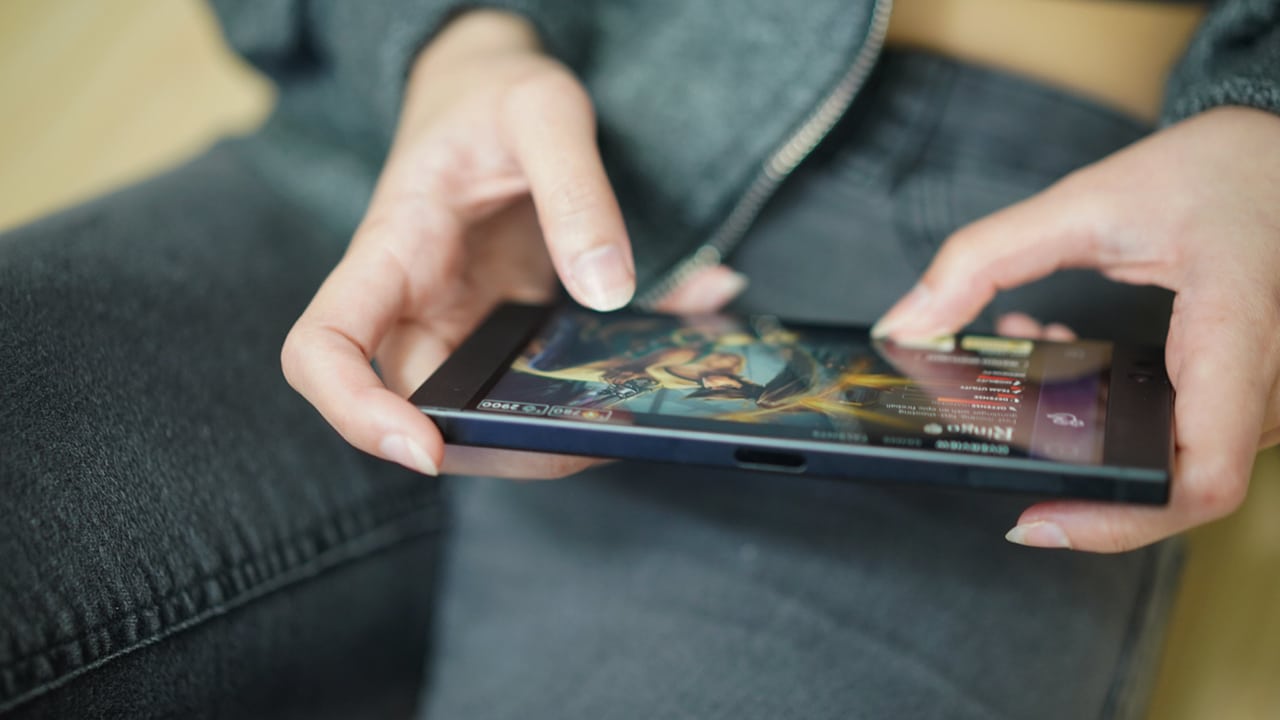
Specifications & Features
| At a glance |
|
| Processor | Qualcomm® Snapdragon™ 835 Mobile Platform |
| System Memory |
|
| Storage |
|
| Display |
|
| Rear Camera |
|
| Front Camera | 8MP FF f2.0 |
| Sound |
|
| Power |
|
| Wireless |
|
| Bands |
|
| Size |
|
Powerful Specs Pack A Punch
The Razer Phone boasts the latest high-end hardware. The phone is equipped with the top processor of the year 2017, a Qualcomm Snapdragon 835 which has a clock speed of 2.35 GHz. In addition, it also has 8 GB of RAM and 64 GB of internal memory. The storage capacity can be expanded to a whopping 2TB (yes, you read that correctly) meaning you won't ever be short on space for your games, movies or music. To test the Razer Phone I used 3DMark for Android. This is the same software we use to test hardware on PCs such as CPUs, GPUs, System Memory and SSD Drives. The Razer Phone I tested ran better than 96% of the same model. It scored a whopping 98% better than all other devices. The FPS stayed between 30-60 during our tests. The temperature stayed consistently below 30 Degrees C while still maintaining a nice FPS number, even when the CPU was under full load. This is impressive for a high-spec phone as 50-60 degrees is generally the norm.