Gamescom 2018: Nvidia unveils the new RTX 2070, 2080 & 2080Ti
By daire-August 20, 2018
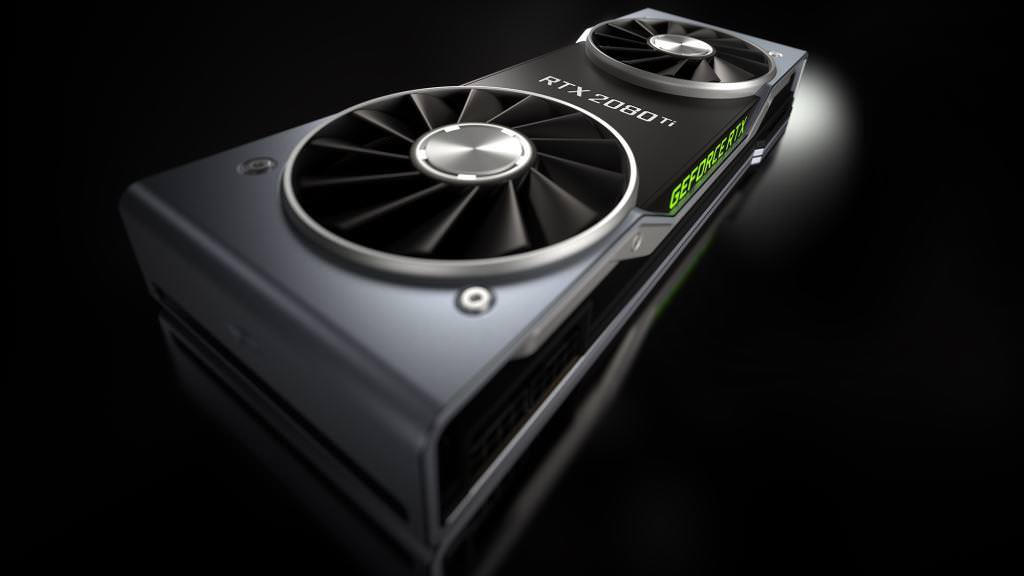
Raytracing
 The great innovation in the new series of cards are the special RT cores that make the new chips suitable for real-time raytracing. This is another way of 3D rendering that can lead to much cleaner 3D images, but until now was too complex to render multiple images per second and was therefore not suitable for 3D gaming. That is why Nvidia has changed the name of its cards from GeForce GTX to GeForce RTX.
Microsoft released the DXR-api earlier this year, with which developers for DirectX games can utilise more advanced shaders that are built with raytracing. Nvidia's new video cards can accelerate these calculations with the RT cores and RTX technology.
Incidentally, the raytracing computing power is far from sufficient to render games completely according to this method. Thanks to RTX technology, however, it is possible to use the traditional rasterization method and ray-tracing hybrid. For example, ray-tracing can be used for more beautiful, more realistic lighting and reflections.
The RTX technology will soon be applied in different games. For example, Nvidia already showed impressive demos of Shadow of the Tomb Raider, Battlefield V and Metro Exodus. The ray-tracing technology offers impressive lighting effects in these games that were not possible before. As an added bonus, various existing games (including PUBG) will get patches to add the new RTX technology.
https://youtu.be/rpUm0N4Hsd8
In addition to the RT cores, the GPUs also contain nursing Tensor cores that can be used for artificial intelligence (AI) and machine learning algorithms. Nvidia wants to use the AI technology (and therefore the Tensor cores) within games, for example for various types of post-processing, such as smart resolution upscaling.
In comparison, the existing GTX 1080 Ti, which conventional shader cores should use for ray-tracing calculations, achieves only 1.21 Gigaray/s. In this aspect, the new card is almost 10x faster. For the combination of the computing power of conventional shader cores, the RT cores and the Tensor cores, Nvidia has created its own "RTX-Ops" unit. The RTX 2080 Ti should be capable of up to 78 Tera RTX-Ops, the RTX 2080 and 2070 respectively up to 60T and 45T RTX-Ops.
The great innovation in the new series of cards are the special RT cores that make the new chips suitable for real-time raytracing. This is another way of 3D rendering that can lead to much cleaner 3D images, but until now was too complex to render multiple images per second and was therefore not suitable for 3D gaming. That is why Nvidia has changed the name of its cards from GeForce GTX to GeForce RTX.
Microsoft released the DXR-api earlier this year, with which developers for DirectX games can utilise more advanced shaders that are built with raytracing. Nvidia's new video cards can accelerate these calculations with the RT cores and RTX technology.
Incidentally, the raytracing computing power is far from sufficient to render games completely according to this method. Thanks to RTX technology, however, it is possible to use the traditional rasterization method and ray-tracing hybrid. For example, ray-tracing can be used for more beautiful, more realistic lighting and reflections.
The RTX technology will soon be applied in different games. For example, Nvidia already showed impressive demos of Shadow of the Tomb Raider, Battlefield V and Metro Exodus. The ray-tracing technology offers impressive lighting effects in these games that were not possible before. As an added bonus, various existing games (including PUBG) will get patches to add the new RTX technology.
https://youtu.be/rpUm0N4Hsd8
In addition to the RT cores, the GPUs also contain nursing Tensor cores that can be used for artificial intelligence (AI) and machine learning algorithms. Nvidia wants to use the AI technology (and therefore the Tensor cores) within games, for example for various types of post-processing, such as smart resolution upscaling.
In comparison, the existing GTX 1080 Ti, which conventional shader cores should use for ray-tracing calculations, achieves only 1.21 Gigaray/s. In this aspect, the new card is almost 10x faster. For the combination of the computing power of conventional shader cores, the RT cores and the Tensor cores, Nvidia has created its own "RTX-Ops" unit. The RTX 2080 Ti should be capable of up to 78 Tera RTX-Ops, the RTX 2080 and 2070 respectively up to 60T and 45T RTX-Ops.
GDDR6 and more Cuda cores
In addition to the focus on raytracing, many more features stand out; The GeForce RTX 2080 has 2944 Cuda cores (conventional 3D calculation units), which is 15% more than the GTX 1080. The card also has 8 GB of GDDR6 memory, the mass production from Micron which by started earlier this summer after Samsung and SK Hynix previously started in early 2018. This very latest version of the GDDR memory, via a 256-bit bus connected to the GPU, manages to achieve a bandwidth of no less than 448GB/s. That is 27% more than the GTX 1080 with GDDR5X received.RTX 2080 Ti
What is special about the RTX 2080 Ti and the RTX 2070 is that they are being introduced right alongside the RTX 2080. In previous generations, the Ti model wasn't released for some months after the non-Ti version. The RTX 2080 Ti gets 4352 Cuda cores (21& more than the GTX 1080 Ti) and has 11 GB of GDDR6 memory connected to the GPU via a 352-bit bus and thus achieves a bandwidth of 616 GB / s, which again 27% more memory bandwidth than its predecessor. The RTX 2070 is based on the same chip as the RTX 2080, but has fewer enabled cores. The RTX 2080 Ti and RTX 2080 include a so-called NVLink connector, in which two cards are linked together to make a modern SLI setup. The RTX 2070, however, lacks that option. The special bridge to connect two cards is sold separately by Nvidia for €79. Here is a look at how the RTX 2080 Ti and the RTX 2080 compare to the GTX 1080 Ti and the GTX 1080:| Number of Cuda cores | Memory | Memory bus | Memory bandwidth | |
| GeForce RTX 2080 Ti | 4352 | 11GB GDDR6 | 352-bit | 616 GB / s |
| GeForce GTX 1080 Ti | 3584 | 11GB GDDR5X | 352-bit | 484 GB / s |
| GeForce RTX 2080 | 2944 | 8GB GDDR6 | 256-bit | 448 GB / s |
| GeForce GTX 1080 | 2560 | 8GB GDDR5X | 256-bit | 352 GB / s |